Monday, June 22, 2015

June Saltwater Lure of the Month: Original MirroLure


June 
Saltwater Lure of the Month
MIRROLURE
The MirrOlure was invented by Harold LeMaster while he was still attending high school during the depth of the Great Depression.  While out walking one afternoon, LeMaster stumbled upon his future in the form of a fallen walnut tree.  Selecting a suitable portion of the tree, LeMaster carved the first version of his MirrOlure using broken glass and scraps of sandpaper.  He brought forth one lure and then dozens more, all carved by hand from the same walnut tree.  As the good word spread about his creation demand for the MirrOlure increased.  LeMaster soon partnered with a close relative to form the L & S Bait Company.  Today, the L& S is still responsible for painstakingly manufacturing this fantastic fish-taker.

Without question, the MirrOlure enclosed was the result of a burst of inspiration from a creative mind, and its handcrafted production was a labor of love.  Much of the hands on attention to the original prototype lives on today.  The L & S Bait Company puts the MirrOlure through no fewer than twenty-seven individual checkpoints in order to assure the highest level of quality possible.  Now primarily known as a productive saltwater lure, a significant segment of the MirrOlure’s market due to the lure’s durability and versatility, many freshwater anglers have rediscovered the MirrOlure.  The MirrOlure is yet another example of a true classic lure still hard at work for today’s anglers in all types of fishing conditions.

Featured Lure: The MirrOlure
Designer: Harold LeMaster
Manufacturer: L & S Bait Company

The Saltwater Lure of the Month Club is a great gift for the loved one in your life.  Sign up the angler in your life for this great fishing gift today!

June Freshwater Lure of the Month: Bomber Model A


June Freshwater Lure of the Month: Bomber Model A


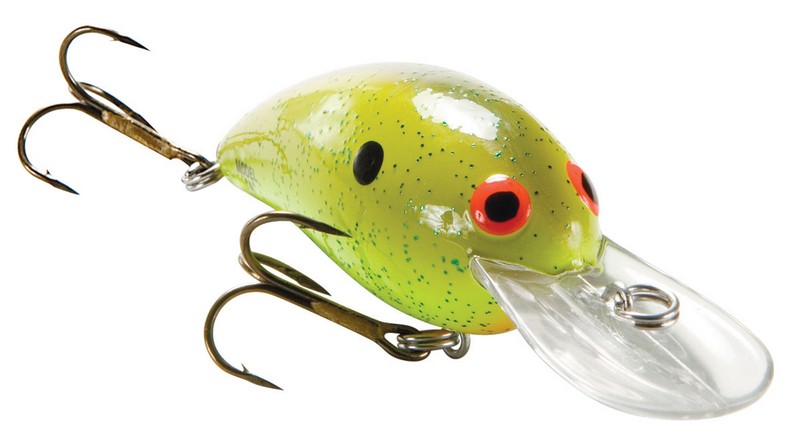
If you were limited to only one crankbait, you'd do well making it a Model A Bomber TM. A staple crankbait with avid fishermen for decades, the Model A's timeless design, workhorse durability and true running dependability, define the meaning of a "Go To Fishing Lure."

Millions of anglers rely on the Bomber Model A to catch a variety of fish, from largemouth and smallmouth bass to white bass, walleye, stripers and more. With a variety of sizes and running depths, there’s a Model A for every situation. For bass, cast and crank windy points and brushy flats. Troll productive areas for walleyes, white bass and other gamefish.


Crankbaits come and go but few plastic crankbaits have had the run the model A baits have. In a variety of sizes and variations the standard model A is still as popular as ever. They aren't as flashy as newer crankbaits but they are durable, cheap, and they still catch fish. If you were starting a crankbait box you could do alot worst than throwing in a couple model A baits. The 7a is the longtime favorite but all the models catch fish. 

For years the 7a was one of KVDs favorite crankbaits but he switched not because they quit catching fish but because of new sponsors. Because they are so cheap and durable you can thrown model As around cover alot easier on the pocketbook. And rocks and grass are where they excel I think. The hooks are better than ever and the colors improve every year. While it may not be the bait that wows your buddies the Model A baits may be the ones you throw the most. - 

June Freshwater Fly of the Month: Fish Skull Forage Fly


June Freshwater Fly of the Month: Fish Skull Forage Fly

The Forage Fly™ combines the unique features of the Fish-Skull™ head with natural body materials and a “frantic tail” to create an incredibly authentic baitfish imitation that is as versatile as it is realistic. While originally designed to target river species, such as trout and smallmouth bass, this pattern has proven itself equally effective at catching a broad range of many other fresh and saltwater species.


The Fish Skull Forage Fly imitates shad, a favorite of predatory fish. This is a perfect streamer pattern for small mouth bass or large trout in big water like the Clinch River, Caney Fork, and Hiwassee with generators running. This fly also has applications for anyone who chases stripers with a fly rod.


“This incredible baitfish imitation is a staple in my repertoire of bass flies and has proven itself time and again as the number one big fish fly on the New River—a world class ‘smallie’ destination. While some anglers may have a tendency to ‘overwork’ the fly by fishing it in short, fast strips much like they might other weighted streamers, the secret is to make long, deliberate strips, allowing the natural action of the pattern to work. Because of the subtle tail motion, the most effective presentation is created by mending the line while sight fishing the fly as it gradually descends in the water column and setting the hook abruptly when it disappears! And, best of all, the Forage Fly works equally well for many other fresh and saltwater species.” – Mike Smith, New River Fly Fishing


  • Fish-Skull head
  • Natural materials
  • Mustad 3366 1/0 hook

Wednesday, May 20, 2015

May Freshwater Fly of the Month: Dry Stone-Stimulator Orange


May Freshwater Fly of the Month: Dry Stone-Stimulator Orange

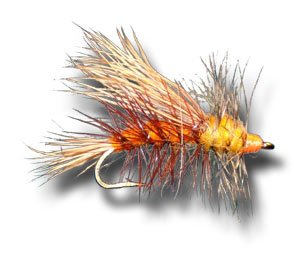
The Stimulator dry fly is a go-to attractor dry fly, particularly when you're dry fly fishing during a big stone fly hatch or salmon fly hatch. This dry fly sits up high in the water, even in faster water. Its "bugginess" also makes the Stimulator one of the very best dry flies to use as an attractor dry fly pattern "prospecting" for trout when there is no hatch. 

Stimulator Orange. We all know how fruitful a colour orange can be. The Orange Stimulator is no exception. A ruggedly hackled searching dry fly that doubles as a tempting sight indication. I don't know how many times I have tied one of these on  a slower day to experience and immediate rod slamming take. make sure that you keep a wide variety of colours and sizes on you patch at all time, the Orange Stimulator is one pattern you won't want to be without.

This is my go-to prospecting fly for just about any stream/creek/small river. It mimics so many species of insects that trout prey upon it is pretty much universal. Not only can you fish it dry, I have often caught fish while stripping the fly in for another cast. I've compared this fly to other stimulators tied by other online fly stores, and there is no doubt about it. These flies stimulate a strike where others do not. Try it for yourself. These flies last longer and yield more strikes. There's really no substitute.

Although listed under stoneflies, a yelllow or orange Stimulator in size 12 or 14 is my go-to choice for my dry-dropper rigs. In smaller sizes it can imitate a caddis or small hopper. But it really shines as an indicator with a dropper and every so often the Stimulator gets nailed too- especially in broken faster water. Don't fish the dry / dropper on too fine a tippet though or you will just twist yourself into frustration.


  • Chemically Sharpened, High Carbon Steel Hook
  • Tied with premium materials such as Whiting Hackles
  • 100% Satisfaction Guaranteed

May Saltwater Lure of the Month: New Shaky Head Jigs


May Saltwater Lure of the Month: New Shaky Head Jigs

Designed using the same style sled head as the popular Punch Jig, you'll get the great stand-up action and the "less Hang-up, More Hook-ups". These jigs are perfect All-Around jigs for panfish, walleye, trout, but even more importantly, they have been deadly on sea trout and other saltwater smaller species.  

Straight tail worms rigged on jigheads have been around since the plastic worm was first invented. In recent years, pro bass anglers have won hundreds of thousands of dollars fishing worms on a new generation of jigheads specifically designed for this application. Termed “shaky heads” because of the way they are fished, these rigs excel at catching limits of keeper sized bass, especially in pressured waters or after cold fronts. Moreover, when Kevin Van Dam caught an 11 lb 13 oz lake record largemouth on Lake Lewisville during a 2005 tournament, anglers quickly realized that shaky heads can produce lunkers too.

Tips for Fishing with Jigs
Jigs can be a highly effective fishing presentation when the proper set-up (rod, reel, line and jig) is used. Unlike a spoon or inline spinner, when a fish strikes the lure and hooks itself, a jig bite most often is very light as the fish inhales the bait usually on the fall when the jig is settling towards the bottom. 

To detect strikes more easily jigs should be fished with stiff (fast action) sensitive rod with enough flex to cast your jig along with using the lightest possible line for the species and fishing conditions. This will help you feel the bite on the retrieve or when the jig is sinking by keeping the line taut. Many expert anglers use the fishing line as a strike indicator, when the jig sinks they watch the line for any subtle twitches signaling a strike or if the line stops indicating a fish is moving upward with the jig. 


To optimize the visual of fishing line jig fisherman prefer to use fluorescent colored line over clear monofilament and wear polarized sunglasses improving the line visibility even more.

Fishing a shaky head is really quite simple, although the best way to retrieve it varies by the day. Basically, work it the same way as you would a Texas rig or a jig. Some days the bass prefer it worked quickly with aggressive hops, while other days slowly dragging it with long pauses or “dead-sticking” works better. And as its name implies, bass can often be triggered by gently shaking the worm while it sits in place. To make your rig dance, gently shake your rod tip with a semi-slack line. This trembling motion will make the worm’s tail pulsate without moving forward. When a fish does strike, a powerful slack line hook set can easily break your line. Rather, reel your line tight and make a smooth sweep set with your rod to get the hook point started and the pull of the bass will drive the thin wire hook the rest of the way through.

May Freshwater Lure of the Month: Fish Hog Roto Head


May Freshwater Lure of the Month: Fish Hog Roto Head


Revolutionary design and action on one of the hottest jig fishing techniques being used today.

Here’s why the Roto Head is better than the rest:

  • Split Ring allows for quick change of hooks.
  • Molded-in 80# test Power Swivel gives your lure 360 degrees of maximum lure action and less line twist.
  • Custom design stand-up head with a recess eye doesn’t hang up like most typical jig head styles.
  • Includes a 4/0 or 5/0 Eagle Claw Wide Gap Mag Hook.

Tips for Fishing with Jigs
Jigs can be a highly effective fishing presentation when the proper set-up (rod, reel, line and jig) is used. Unlike a spoon or inline spinner, when a fish strikes the lure and hooks itself, a jig bite most often is very light as the fish inhales the bait usually on the fall when the jig is settling towards the bottom. 

To detect strikes more easily jigs should be fished with stiff (fast action) sensitive rod with enough flex to cast your jig along with using the lightest possible line for the species and fishing conditions. This will help you feel the bite on the retrieve or when the jig is sinking by keeping the line taut. Many expert anglers use the fishing line as a strike indicator, when the jig sinks they watch the line for any subtle twitches signaling a strike or if the line stops indicating a fish is moving upward with the jig. 

To optimize the visual of fishing line jig fisherman prefer to use fluorescent colored line over clear monofilament and wear polarized sunglasses improving the line visibility even more.

5 Star Reviews!

"Great product. I love that you can change the hook out on this style. We all know how no matter what hook you use it can get dull. Plus there are times I want a big Ol hook for throwing a 12 inch worm on ledges. 5 stars for sure!!!!"

Friday, April 17, 2015

April Freshwater Fly of the Month: Crystal Bugger Black Beadhead


April Freshwater Fly of the Month: Crystal Bugger Black Beadhead

The Wooly Bugger fly pattern has to be one of the most productive streamer patterns to ever be created. Over the last few decades the wooly bugger style of flies have without a doubt accounted for more and larger fish being duped than with any other freshwater fly. The main reason for the wooly bugger’s great success is its ability to be adapted to catch virtually any fresh water fish that exists and to be used in all the different water conditions that may occur. From trout to bass, rivers to spring fed lakes the wooly bugger can just about do it all. The Crystal Bugger fly pattern is a relatively new addition to the wooly bugger family. 

Simple enough the crystal bugger boasts a flashy estaz body instead of the traditional chenille to spice things up a bit. This added flash coupled with the undulating action produced by the marabou tail in the water makes this fly a definite steelhead spring time favorite. Another of the key features of this fly is the Spirit River metallic bead head. This bead head provides the fly with the necessary weight to get it down on the bottom of those big deep pools where the big steelies like to hang out.


Fishing the bead head crystal bugger is relatively simple. If you are going to be fishing very cold weather cast this pattern to your target and let it dead drift drag-free down the river. Fish that are in these very cold temperatures become very lackadaisical and will not aggressively search out and chase down prey. Providing a slow subtle presentation with the crystal bugger will help keep your fly in the fish’s strike zone for longer providing you with a better chance of hooking into quality fish. In summer these same lazy fish will now be ready for a more active and rapid approach. Continuously stripping in the wooly pattern will have the head-heavy fly dancing up and down in the water column driving the fish wild.